If you paste, layer, seal or build with paper, PVA is probably the glue already on your bench. It’s the white craft glue that does most of the quiet work in a studio, and it does a few things most people never realise. Here’s what it actually is, how it behaves, and how to get the best out of it. (When you’re ready to restock, our full Glues & Applicators range is dispatched quickly from Brighton.)
Just need the right glue for your project? If you’re pasting wet strength tissue paper over a willow or wire frame, here’s the short version:
- Standard lanterns & structures → Washable PVA. Easy to use, easy to clean up.
- Stronger, sturdier or longer-lasting builds (or anything going outdoors) → Multi-Surface PVA. Tougher and more water-resistant.
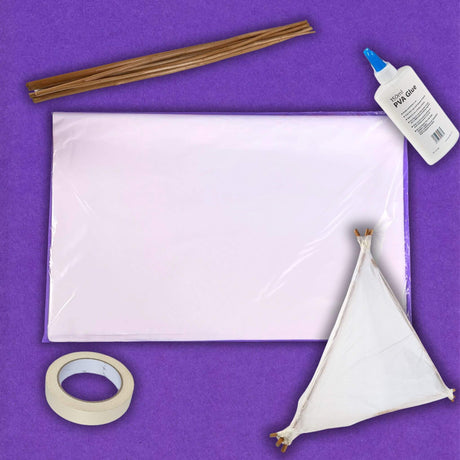
- Starting from scratch? The Glow Lantern Kit (£29.86) has everything for one complete 50cm lantern.
Quick jump menu
- What is PVA glue?
- How does PVA glue work?
- Does PVA glue dry clear?
- Is PVA glue waterproof?
- Is PVA glue washable, non-toxic and acid-free?
- What is PVA glue used for?
- PVA and wet strength tissue
- Diluting PVA glue
- How to use PVA glue
- What you’ll need
- PVA glue FAQ
What is PVA glue?
PVA glue is a water-based adhesive made from polyvinyl acetate, a flexible synthetic polymer. It goes on white and creamy, soaks into porous materials like paper, card and wood, and dries to a clear, flexible bond. Because it’s water-based it’s low-odour, non-toxic in craft grades, and cleans up with water before it sets. That combination is why it’s the standard glue for papercraft, papier-mâché, collage, bookbinding and school and workshop projects. (All the glues we stock are non-toxic, wheat-free and gluten-free.)
It’s reliable, forgiving, and it plays well with paper. For makers, that’s most of what matters.

How does PVA glue work?
PVA bonds by soaking in, not by reacting. When you spread it onto a porous surface, the liquid carries the polymer down into the fibres. Press two coated pieces together and those polymer chains knit through both surfaces. As the water evaporates, the polymer particles draw together into one continuous, flexible film, and that film is the bond.
Two practical things follow from that. First, PVA needs at least one porous surface to grip properly, which is why it’s brilliant on paper and wood and poor on glossy plastic or metal. Second, it needs air to dry, so a thinner, even coat sets faster and stronger than a thick gluey layer that traps moisture in the middle. A decent glue spreader or paste brush makes that even coat far easier to lay down.
Does PVA glue dry clear?
Yes, white PVA dries clear. It looks milky in the bottle and while it’s wet, but as the water evaporates the film becomes transparent and lets light pass through it cleanly. A normal craft coat is usually touch-dry in around 20–30 minutes and fully cured within 24 hours, depending on thickness, humidity and how absorbent your surface is. Our Multi-Surface PVA Glue dries to a crystal-clear, flexible finish and is more water-resistant than a standard washable glue, which is why makers reach for it as a painting and sealing medium.
A few honest caveats, because this is where projects go wrong:
- It only dries clear if it dries fully. Thick beads or pooled glue can stay cloudy in the centre. Thin and even wins.
- Squeeze-out left on the surface can dry shiny. Wipe excess with a damp cloth before it sets.
- On a translucent surface, like wet strength tissue over a lantern frame, a thin, even coat keeps that lovely light-through glow. A heavy coat dulls it.
Is PVA glue waterproof?
No PVA is truly waterproof, because it’s water-based, but water-resistance varies a lot by formulation, and the difference matters. A Multi-Surface PVA has a higher polymer (plastic) content, so once it’s fully cured it’s noticeably more water-resistant and copes better with the odd splash or bit of damp. A washable PVA contains less plastic. That’s exactly what lets it lift out of clothes, brushes and carpets so easily, but it also makes it less water-resistant.
So choose a multi-surface PVA where the finish needs to stand up to a little moisture, and a washable PVA where easy clean-up matters more (think classrooms and group sessions). For anything that genuinely lives outdoors or gets soaked, neither is enough on its own, so seal over the top with a dedicated waterproof finish.
Is PVA glue washable, non-toxic and acid-free?
For schools and group workshops, three things matter, and PVA can tick all three. Just check the grade:
- Washable versions are formulated to come out of clothes and off hands and tables with water. Our Washable PVA Glue comes in sizes from a 150ml bottle up to a 5-litre eco pouch for busy classrooms (it contains less plastic, which is what makes it wash out so easily).
- Non-toxic craft and school grades are designed for use by children and groups, like our 150ml Non-Toxic Washable PVA, from just £1.85. All our glues are non-toxic, wheat-free and gluten-free. Always confirm the specific product, not just the category.
- Acid-free matters if the work needs to last, for bookbinding, archival collage and keepsake pieces. Acid-free PVA won’t yellow or eat into paper over time.

If you run sessions or sell finished work, these aren’t nice-to-haves. They’re the difference between a piece that survives and one that doesn’t. Stocking a workshop? The 5-litre sizes in our glues range work out far cheaper per millilitre and save you reordering mid-term.
What is PVA glue used for?
This is where PVA earns its place on the bench. The everyday uses:
- Papercraft, card making and collage: clean, flat bonds that dry clear.
- Papier-mâché: diluted PVA is the classic paste for layering paper over a mould or armature.
- Bookbinding and repairs: flexible enough to bend with a spine without cracking (use acid-free for anything you want to keep).
- Decoupage and sealing: brush it over a finished surface as a clear, protective top coat.
- Mosaics, models and general making: a dependable all-rounder wherever a porous surface is involved.
And the use closest to our heart:
PVA and wet strength tissue: building with confidence
Here’s where most glue guides stop and we keep going. PVA and wet strength tissue paper are a natural pair, and it’s the combination behind a lot of the work our makers do.
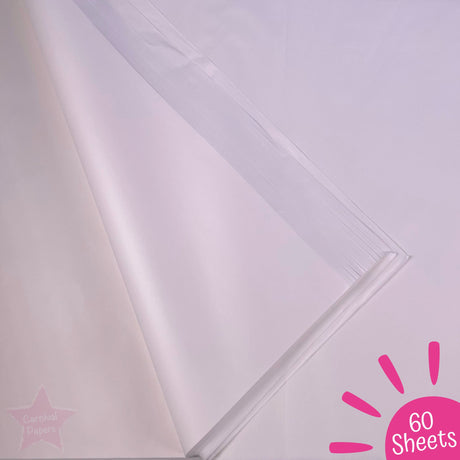
Ordinary tissue tears the moment it gets wet, so pasting it over a frame is a fight. It shreds, it bunches, the colours go muddy. Wet strength tissue holds together when pasted, which is exactly what you need when you’re stretching it over a willow or wire structure. Brush diluted PVA over the frame, lay the tissue, and because it stays strong while damp you can smooth it, reposition it and layer it without it falling apart. As the PVA dries clear, the tissue stays beautifully translucent, a perfect white base for light to glow through, or for colour and paint to sit on.
That’s the recipe behind willow lanterns, large-scale parade builds, sculptural papier-mâché and translucent panels. The frame gives the shape; the wet strength tissue gives the skin; the PVA holds it all together and disappears.

Which PVA for lanterns and structures? For standard structure and lantern builds, we’d recommend our Washable PVA. It’s easy to work with and easy to clean up. If you want the lantern to be a bit more robust and stronger, step up to our Multi-Surface PVA for a tougher, more water-resistant bond.
New to it? Our Glow Lantern Kit (£29.86) has everything for one complete 50cm lantern, or browse the full Make a Willow Lantern range to build at scale.
Diluting PVA glue
Diluting PVA makes it easier to spread, helps it soak in, and turns it into a sealant or glaze. How much water you add depends on the job, and on whether you’re using a stronger multi-surface PVA or a washable one. These ratios are glue to water:
- 1:1 (half glue, half water): a runny mix for priming and sealing surfaces, such as paper or wood, before you build.
- 2:1 (two parts glue, one part water): the sweet spot for decoupage and for layering wet strength tissue without making it stiff.
- 3:1 (three parts glue, one part water): keeps a strong bond while still brushing on easily.
Washable PVA can be diluted the same way. Just remember it gives a slightly softer, less water-resistant finish than a multi-surface PVA at the same ratio.
How to use PVA glue (quick maker’s notes)
- Thin coats, evenly spread. Better bond, faster dry, clearer finish.
- For layering wet strength tissue, use a 2:1 mix (two parts glue to one part water) and apply gently with a soft brush or sponge so you don’t tear the sheet.
- Clamp or weight flat work while it sets to stop paper curling.
- Let it dry naturally. Forcing the drying can shrink or warp the work; once dry, a final coat of diluted PVA seals it for extra durability.
- Clean up wet. Damp cloth on tools and surfaces before it cures; once it’s set, it’s set.
- Store it sealed and frost-free. PVA doesn’t like freezing, which can split the emulsion.
What you’ll need from Carnival Papers
Everything for a paste-and-layer project, in one place, dispatched quickly from Brighton:
- The glue: 150ml Non-Toxic Washable PVA for home and small groups · Washable PVA Glue up to 5L for workshops · Multi-Surface PVA Glue for a clear, water-resistant, harder-wearing finish
- To apply it: glue spreaders and paste brushes
- To build with it: wet strength tissue paper, in large sheets for lanterns & sculpture or studio sizes for mixed media & gel plate printing
Shop the full Glues & Applicators range →
PVA glue FAQ
Does PVA glue dry clear? Yes. It dries from milky-white to a clear, flexible film as the water evaporates. Keep coats thin and even for the cleanest finish. Our Multi-Surface PVA Glue dries especially clear.
Is PVA glue waterproof? No PVA is fully waterproof, but water-resistance varies. A multi-surface PVA (more plastic) is more water-resistant once cured than a washable PVA (less plastic). For anything that gets genuinely wet, seal over the top.
How long does PVA take to dry? Roughly 20–30 minutes to touch-dry and up to 24 hours to fully cure, depending on thickness and humidity.
How do I dilute PVA glue? Glue to water: 1:1 for priming and sealing, 2:1 for decoupage and layering wet strength tissue, 3:1 for a strong bond that still brushes on easily.
Is PVA glue safe for children and schools? Washable, non-toxic craft grades are made for exactly this. Our 150ml Non-Toxic Washable PVA is a classroom staple, and all our glues are non-toxic, wheat-free and gluten-free. Always check the individual product.
Can I use PVA for papier-mâché? Yes. Diluted PVA is the classic paste, and around 2:1 glue to water is a good starting point. Pair it with wet strength tissue for layered work that won’t tear.
Can I dilute PVA as a sealer or varnish? Yes. Thinned with water it brushes on as a clear protective top coat for finished pieces.
Carnival Papers is a Brighton-based specialist in wet strength tissue paper and the materials makers actually use. Quick UK dispatch and easy reordering, so your shelves stay stocked and your makers keep coming back. Browse the glues range or explore wet strength tissue.